
Your First Steps in Understanding Milestones
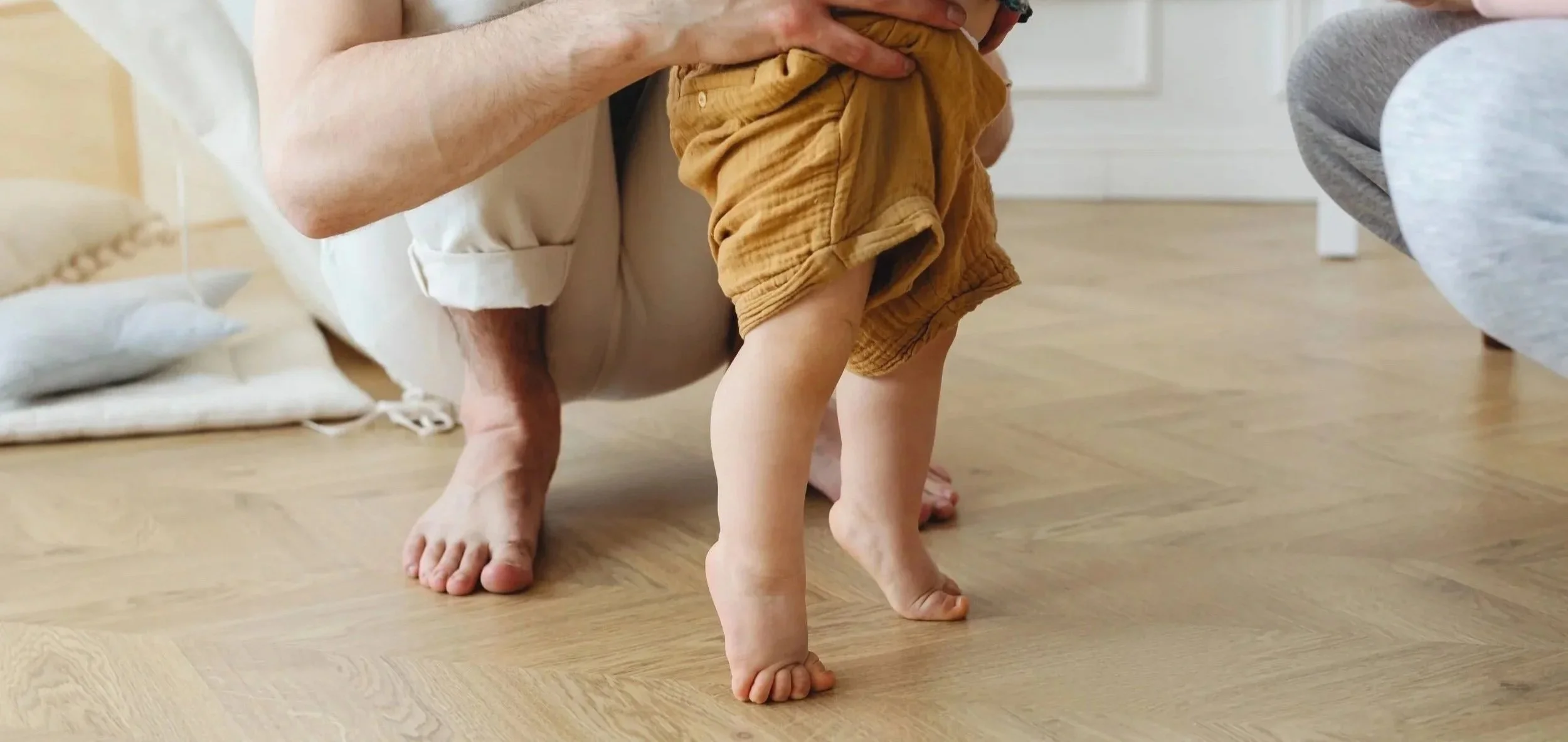
As parents, we spend the first year eagerly waiting for those exciting “firsts.”
The first smile.
The first roll.
The first crawl.
The first steps.
Along the way, you’ve probably heard the phrase: “Every baby develops at their own pace.”
And for the most part, this is true.
No two babies follow exactly the same timeline, and development isn’t about reaching each milestone at the earliest possible age. Some babies roll early and walk later. Others are content to observe their surroundings before suddenly taking off seemingly overnight.
So, if every baby develops differently, why do healthcare providers pay so much attention to when a baby reaches a motor milestone?
Because movement tells us a story during a time when babies are not yet able to communicate verbally.
A baby’s ability to reach a milestone reflects how their brain, body, and environment are working together—and each new skill creates opportunities for the next.
What Are Motor Milestones?
Motor milestones are the average, approximate range at which we expect babies to develop me movement skills. Rather than focusing on a single age, healthcare providers look at developmental “windows” because normal development naturally varies from one baby to another.
While every baby develops differently, here are some approximate windows in which we generally expect to see these skills emerge:
0–3 months
Motor milestone - Lifts head during tummy time
Why it matters - Develops neck strength, visual tracking, and early postural control
3–5 months
Motor milestone - Rolls from tummy to back, then back to tummy
Why it matters - Teaches weight shifting, body awareness, rotational movement and early foundations for trunk coordination with the upper and lower limbs
5–7 months
Motor milestone - Sits independently
Why it matters - Builds on foundational trunk stability while freeing the hands for exploration and play
6–10 months
Motor milestone - Crawls or creeps, with many variations
Why it matters - Strengthens the shoulders, hips, and core while developing bilateral coordination, visual-motor integration, and spatial awareness
8–10 months
Motor milestone - Pulls to stand and cruises along furniture
Why it matters - Builds balance, lower-body strength, and confidence with upright movement
10–12 months
Motor milestone - Takes independent steps
Why it matters - Combines strength, balance, coordination, and motor planning into walking
It’s important to remember that these are guidelines, not deadlines.
Your baby might bottom-shuffle, army crawl, or cruise along furniture for longer than you expect. Variations in how and when babies reach milestones are often a normal part of development.
These motor milestones are influenced by an interplay of three important factors:
Brain Development
Your baby’s brain is constantly building new connections, but the first year of life is a particularly important period of rapid growth and development. As neural pathways mature and strengthen, your baby develops greater control over their muscles, balance, coordination, and body awareness. Before a baby can crawl, for example, their brain needs to learn how to coordinate different parts of the body—including the left and right sides—while maintaining balance and controlling movement.
Physical Abilities
Babies also need the physical capacity to perform each movement.
Depending on the age and skill, this can include developing:
Muscle strength
Core strength
Postural control
Balance
Joint stability
Coordination
Think about walking. While it might seem simple, taking those first independent steps requires enough strength through the legs and trunk, along with the balance, coordination, and motor planning needed to move from one foot to the other.
Engagement With Their Environment
Babies don’t learn movement in isolation. They move because they are curious. Maybe there’s a toy across the room, a sibling laughing, a pet walking by, or a parent calling their name.
Every new movement gives babies access to something exciting. The more opportunities babies have to explore their environment, the more opportunities they have to interact, learn, problem-solve, and develop the next skill.
Movement and exploration go hand in hand.
Why Does “The Milestone” Matter?
Motor milestones aren’t simply boxes to check off. They provide valuable information about how your baby’s musculoskeletal and nervous systems, physical abilities, and environment are working together to support healthy development.
Each Milestone Lays the Foundation for the Next
Sometimes babies spend a little longer on one stage because they are mastering an important skill before moving forward. While this can be completely normal, a significantly delayed or absent milestone may occasionally indicate that a baby is having difficulty developing some of the foundational skills needed for future movement.
For example, a consistent head preference to one side may make it more difficult for a baby to comfortably turn their head in the opposite direction. This can influence how they experience movements such as rolling and may contribute to developing movement patterns that favour one side of the body.
Recognizing these patterns early can help families understand what may be influencing their baby’s movement and identify ways to support more balanced movement.
Delayed Milestones Can Be an Early Clue That Something Is Making Movement More Difficult
Before babies can tell us that something feels uncomfortable or difficult, they often communicate through their movement. A delay in reaching a motor milestone does not necessarily mean that something is wrong. However, it can be a reason to look more closely at factors that may be affecting movement.
These can include:
Asymmetrical movement patterns
Muscle tightness
Reduced joint mobility
Differences in muscle tone
Underlying medical conditions
Limited opportunities to practise new skills
Identifying potential contributing factors early can help families and healthcare providers better understand what a baby needs to move comfortably and confidently.
Movement Is One of the Primary Ways Babies Learn During the First Year of Life
It’s easy to think of motor milestones as simply learning how to move. But movement is also how babies learn about the world around them. Every reach, roll, and crawl across the room provides opportunities to develop and practise new skills.
As babies move, they are also developing:
Sensory processing
Fine motor skills
Hand-eye coordination
Depth perception
Motor planning
Problem-solving
Body awareness
Confidence
The more babies move, the more they explore. The more they explore, the more opportunities they have to interact with their environment, solve problems, and learn how the world works.
Supporting Your Baby’s Development
As a Parent, When Should You Be Concerned?
Most of the time, a baby taking a little longer to reach a motor milestone is not a significant cause for concern. There are many predictable and perfectly normal reasons why a baby might develop a particular skill later than expected.
As parents, it’s natural to want to understand your baby’s development and learn how you can best support their movement and learning.
It may be worth seeking guidance or reassurance from a licensed healthcare professional if you notice:
Difficulty tolerating tummy time or holding their head up
Asymmetries when rolling, leaning consistently to one side, or limited movement in one limb
Generalized irritability or frequent arching of the back
Your baby is not showing signs of progressing toward a milestone within the expected developmental window
The earlier we identify what may be getting in the way, the sooner we can help support healthy movement patterns and create more opportunities for your child to learn through movement and exploration. Understanding how your baby is developing—and making sure they have opportunities to interact with the world around them—is a proactive way to support their development.
At Bright Health Co., our team is here to help you understand your baby’s movement and provide support along the way. Sometimes, that support may simply be reassurance. Other times, a few simple play ideas, environmental modifications, or gentle hands-on care may help your baby move more comfortably and confidently.
Every baby develops in their own way. Our goal is to help you understand their unique journey and feel confident supporting them along the way.
For more information on pediatric chiropractic care, book a complimentary 15-minute meet and greet with one of our Bright chiropractors.
WRITTEN BY: DR. KARISHMA KAPOOR, DC
Disclaimer
The advice provided in this article is for information purposes only. It is meant to augment and not replace consultation with a licensed healthcare provider. Consultation with a chiropractor or other primary care provider is recommended for anyone suffering from a health problem.